ReplacementHQAccessibility

Home3D printingBambu LabH2D

Bambu Lab H2D

The materials it can print and the parts that wear out. 13 answers, all from Bambu Lab's own information.

Type
Enclosed
Status
Current
Answers
13
Checked
18 November 2026

Part-by-part answers for the H2D aren't ready yet. The answers below cover the materials it can print and the parts that wear out, from Bambu Lab's own information.

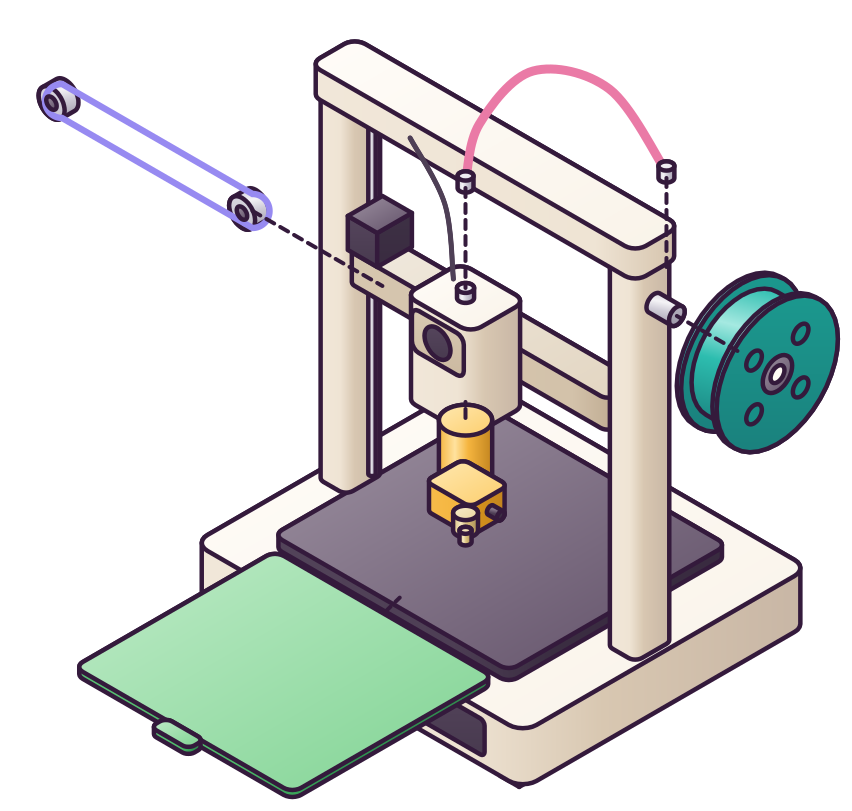
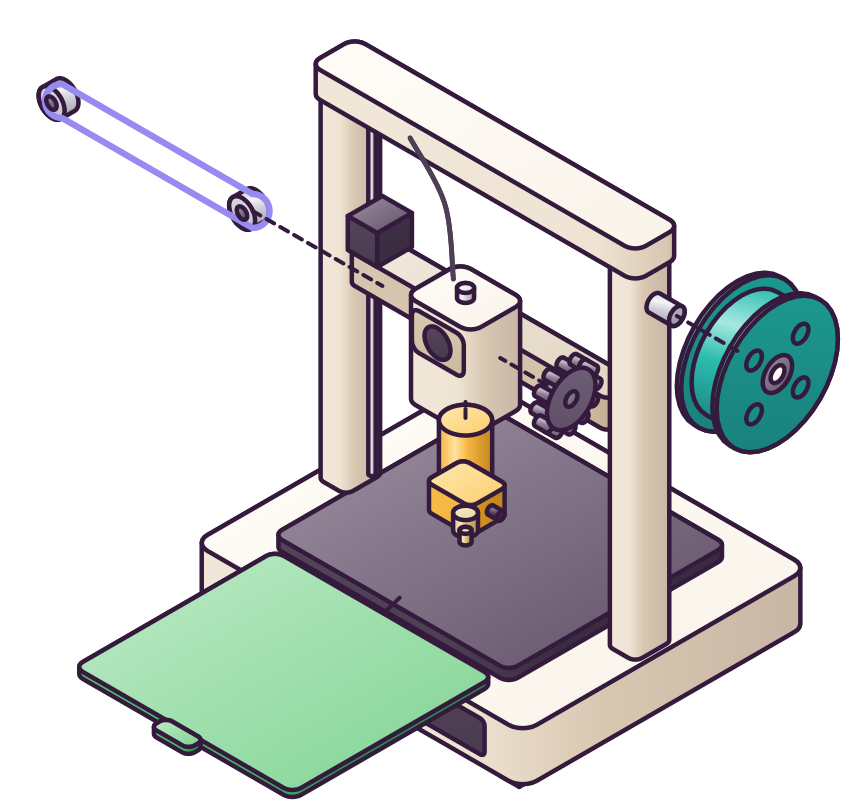
What the Bambu Lab H2D takes, part by part

Generic drawing · not to scale
MATERIAL · TPUCHECKED 18 NOVEMBER 2026

Can the Bambu Lab H2D print TPU?

Fits, with limits

Bambu lists TPU as suitable for open-frame or enclosed printers and names the H2 series as enclosed. Its TPU guide adds that the AMS and AMS 2 Pro cannot feed ordinary TPU. To hold it, Bambu names the AMS HT, used only as a sealed box and fed through its rear TPU outlet, or a filament dry box.

Limits

  1. Ordinary TPU cannot be fed through the AMS, AMS lite or AMS 2 Pro. Bambu's own 'TPU for AMS' filament is the exception. The AMS HT can hold TPU but only as a sealed box, fed through its rear TPU outlet. Bambu also names a filament dry box. Bambu's newer AMS 3H must be used with an H3C printer.
  2. Bambu's TPU table marks TPU 75A, a softer grade on 2.85 mm filament, as not compatible with the H2 series, which includes the H2D.
  3. Bambu says not to use the Cool Plate SuperTack to print TPU.

Applies to

SOURCES 8 quotes from the maker, checked 18 November 2026
  1. SRC 01 Filament guide: material table (Bambu Lab Wiki)

    PLA, PETG, TPU, and their CF/GF reinforced materials ... Open-frame or enclosed printer ... Enclosed printer ( Bambu H2 Series, X2D, P2S, X1, X1C, P1S, etc. )

    Bambu Lab · checked 18 November 2026

  2. SRC 02 TPU printing guide (Bambu Lab Wiki)

    AMS 2 Pro AMS lite AMS ... TPU 85A ❌ ✅ ✅ ❌ ⚠️ ❌ ❌ ❌

    How to read this: Bambu's AMS table: the AMS 2 Pro, AMS lite and AMS are its last three columns, and the last three marks on the TPU 85A row are ❌ (not usable). On the source page the TPU 75A, 90A and 95A HF rows end with the same three ❌ marks.

    Bambu Lab · checked 18 November 2026

  3. SRC 03 TPU printing guide (Bambu Lab Wiki)

    TPU for AMS: Can be printed using the regular automatic feeding function of all AMS series products.

    Bambu Lab · checked 18 November 2026

  4. SRC 04 TPU printing guide (Bambu Lab Wiki)

    AMS HT: Use it only as a sealed container. Feed the filament through the TPU outlet on the back.

    Bambu Lab · checked 18 November 2026

  5. SRC 05 TPU printing guide (Bambu Lab Wiki)

    AMS 3H Must be used with an Bambu Lab H3C printer. For other models, use AMS HT or a filament dry box.

    Bambu Lab · checked 18 November 2026

  6. SRC 06 Bambu Lab AMS HT (UK store)

    The AMS HT will be compatible with all Bambu Lab products

    Bambu Lab · checked 18 November 2026

  7. SRC 07 TPU printing guide (Bambu Lab Wiki)

    TPU 75A( 2.85 mm) TPU 85A TPU 90A TPU 95A HF TPU for AMS H2, X, and P Series ❌ ✅ ✅ ✅ ✅

    How to read this: Bambu's printer table: each mark is one TPU grade in the order of the headings. For the H2, X and P series, TPU 75A is marked ❌ (not compatible) and the other four ✅.

    Bambu Lab · checked 18 November 2026

  8. SRC 08 TPU printing guide (Bambu Lab Wiki)

    Do not use the Cool Plate SuperTack to print TPU.

    Bambu Lab · checked 18 November 2026

Every answer for the H2D

We have 13 answers for the Bambu Lab H2D: 7 on materials and 6 on parts that wear out. Each one quotes Bambu Lab's own information. We last checked them on 18 November 2026. We haven't physically tested this printer. How we check answers.

Parts that wear out

Nozzle system on the Bambu Lab H2D

Maker fact

The H2D hotend has a quick-swap design: unlock the latch to remove or install the hotend.

1 quote from Bambu Lab, checked 18 November 2026. See the maker's words
  1. SRC 01 Nozzles (Bambu Lab Wiki)

    This hotend features a quick swap design, which enables easy separation of the thermal and electronic components of the hotend. Simply unlock the latch

    Bambu Lab · checked 18 November 2026

Stock nozzle on the Bambu Lab H2D

Maker fact

The H2D ships with a 0.4 mm hardened steel nozzle.

1 quote from Bambu Lab, checked 18 November 2026. See the maker's words
  1. SRC 01 Bambu Lab H2D (UK store)

    Nozzle Hardened Steel Max Nozzle Temperature 350 °C Included Nozzle Diameter 0.4 mm

    Bambu Lab · checked 18 November 2026

Hardened-nozzle guidance on the Bambu Lab H2D

Maker fact

For carbon and glass-fibre filament Bambu says not to use stainless steel or brass nozzles; the H2D stock nozzle is hardened steel.

3 quotes from Bambu Lab, checked 18 November 2026. See the maker's words
  1. SRC 01 Filament guide: material table (Bambu Lab Wiki)

    When printing carbon fiber or glass fiber-reinforced materials

    Bambu Lab · checked 18 November 2026

  2. SRC 02 Filament guide: material table (Bambu Lab Wiki)

    Do not use a stainless steel or brass nozzle. Their hardness is insufficient, so they wear out quickly

    Bambu Lab · checked 18 November 2026

  3. SRC 03 Bambu Lab H2D (UK store)

    Nozzle Hardened Steel Max Nozzle Temperature 350 °C

    Bambu Lab · checked 18 November 2026

Stock build plate on the Bambu Lab H2D

Maker fact

The H2D series comes with a Textured PEI Plate.

1 quote from Bambu Lab, checked 18 November 2026. See the maker's words
  1. SRC 01 Introduction to the H2D (Bambu Lab Wiki)

    The H2D series printer comes with a Textured PEI Plate.

    Bambu Lab · checked 18 November 2026

PTFE tube on the Bambu Lab H2D

Maker fact

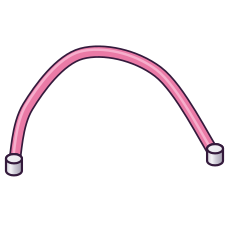
For the H2D the maker lists an AMS to filament buffer tube of 900 mm (no less than 600 mm recommended), 2.5 mm inner and 4.0 mm outer diameter. PTFE tube carries the filament from the AMS or the external spool holder to the extruder, which is inside the toolhead. Bambu recommends replacing the tube every two months under normal use, and inspecting it every month with highly abrasive filaments such as carbon fibre or glow-in-the-dark.

5 quotes from Bambu Lab, checked 18 November 2026. See the maker's words
  1. SRC 01 PTFE tube (Bambu Lab Wiki)

    H2C / H2D Tube Location Qty Length ID / OD

    Bambu Lab · checked 18 November 2026

  2. SRC 02 PTFE tube (Bambu Lab Wiki)

    AMS → Filament Buffer 1 900 mm (recommended no less than 600 mm) 2.5 / 4.0 mm

    Bambu Lab · checked 18 November 2026

  3. SRC 03 PTFE tube (Bambu Lab Wiki)

    routing it from the Automatic Material System (i.e. AMS) or the external spool holder to the extruder inside the printer toolhead

    Bambu Lab · checked 18 November 2026

  4. SRC 04 PTFE tube (Bambu Lab Wiki)

    Under normal usage, we recommend replacing the tube every two months

    Bambu Lab · checked 18 November 2026

  5. SRC 05 PTFE tube (Bambu Lab Wiki)

    When printing with highly abrasive filaments (such as carbon fiber or glow-in-the-dark filaments), we recommend inspecting the tube every month

    Bambu Lab · checked 18 November 2026

Belts on the Bambu Lab H2D

Maker fact

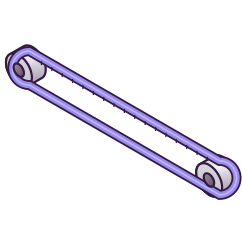
The H2D has an adjustable belt tensioner on the rear, and a Belt Tension Monitor that gives feedback so you can adjust tension.

1 quote from Bambu Lab, checked 18 November 2026. See the maker's words
  1. SRC 01 Introduction to the H2D (Bambu Lab Wiki)

    The H2D has an adjustable belt tensioner on the rear. The Belt Tension Monitor (BTM) will monitor the tension of the belt

    Bambu Lab · checked 18 November 2026

Which materials can the H2D print?

Can the Bambu Lab H2D print PLA?

Fits

Bambu lists PLA as suitable for open-frame or enclosed printers and names the H2 series as enclosed.

1 quote from Bambu Lab, checked 18 November 2026. See the maker's words
  1. SRC 01 Filament guide: material table (Bambu Lab Wiki)

    PLA, PETG, TPU, and their CF/GF reinforced materials ... Open-frame or enclosed printer ... Enclosed printer ( Bambu H2 Series, X2D, P2S, X1, X1C, P1S, etc. )

    Bambu Lab · checked 18 November 2026

Can the Bambu Lab H2D print PETG?

Fits, with limits

Bambu lists PETG as suitable for open-frame or enclosed printers and recommends an enclosed printer for it; the H2 series is enclosed. On the H2D, Bambu says not to print PVA and PETG at the same time on the two hotends.

Limit

  1. Do not print PVA and PETG at the same time on the left and right hotends.
3 quotes from Bambu Lab, checked 18 November 2026. See the maker's words
  1. SRC 01 Filament guide: material table (Bambu Lab Wiki)

    PLA, PETG, TPU, and their CF/GF reinforced materials ... Open-frame or enclosed printer ... Enclosed printer ( Bambu H2 Series, X2D, P2S, X1, X1C, P1S, etc. )

    Bambu Lab · checked 18 November 2026

  2. SRC 02 Filament guide: material table (Bambu Lab Wiki)

    Note : For PETG and PETG-CF/GF, an enclosed printer is recommended to prevent low ambient temperatures from reducing the model's interlayer strength.

    Bambu Lab · checked 18 November 2026

  3. SRC 03 H2D filament configuration limits (Bambu Lab Wiki)

    PVA and PETG Should Not Be Printed Simultaneously Using Left and Right Hotends

    Bambu Lab · checked 18 November 2026

Can the Bambu Lab H2D print TPU?

Fits, with limits

Bambu lists TPU as suitable for open-frame or enclosed printers and names the H2 series as enclosed. Its TPU guide adds that the AMS and AMS 2 Pro cannot feed ordinary TPU. To hold it, Bambu names the AMS HT, used only as a sealed box and fed through its rear TPU outlet, or a filament dry box.

Limits

  1. Ordinary TPU cannot be fed through the AMS, AMS lite or AMS 2 Pro. Bambu's own 'TPU for AMS' filament is the exception. The AMS HT can hold TPU but only as a sealed box, fed through its rear TPU outlet. Bambu also names a filament dry box. Bambu's newer AMS 3H must be used with an H3C printer.
  2. Bambu's TPU table marks TPU 75A, a softer grade on 2.85 mm filament, as not compatible with the H2 series, which includes the H2D.
  3. Bambu says not to use the Cool Plate SuperTack to print TPU.
8 quotes from Bambu Lab, checked 18 November 2026. See the maker's words
  1. SRC 01 Filament guide: material table (Bambu Lab Wiki)

    PLA, PETG, TPU, and their CF/GF reinforced materials ... Open-frame or enclosed printer ... Enclosed printer ( Bambu H2 Series, X2D, P2S, X1, X1C, P1S, etc. )

    Bambu Lab · checked 18 November 2026

  2. SRC 02 TPU printing guide (Bambu Lab Wiki)

    AMS 2 Pro AMS lite AMS ... TPU 85A ❌ ✅ ✅ ❌ ⚠️ ❌ ❌ ❌

    How to read this: Bambu's AMS table: the AMS 2 Pro, AMS lite and AMS are its last three columns, and the last three marks on the TPU 85A row are ❌ (not usable). On the source page the TPU 75A, 90A and 95A HF rows end with the same three ❌ marks.

    Bambu Lab · checked 18 November 2026

  3. SRC 03 TPU printing guide (Bambu Lab Wiki)

    TPU for AMS: Can be printed using the regular automatic feeding function of all AMS series products.

    Bambu Lab · checked 18 November 2026

  4. SRC 04 TPU printing guide (Bambu Lab Wiki)

    AMS HT: Use it only as a sealed container. Feed the filament through the TPU outlet on the back.

    Bambu Lab · checked 18 November 2026

  5. SRC 05 TPU printing guide (Bambu Lab Wiki)

    AMS 3H Must be used with an Bambu Lab H3C printer. For other models, use AMS HT or a filament dry box.

    Bambu Lab · checked 18 November 2026

  6. SRC 06 Bambu Lab AMS HT (UK store)

    The AMS HT will be compatible with all Bambu Lab products

    Bambu Lab · checked 18 November 2026

  7. SRC 07 TPU printing guide (Bambu Lab Wiki)

    TPU 75A( 2.85 mm) TPU 85A TPU 90A TPU 95A HF TPU for AMS H2, X, and P Series ❌ ✅ ✅ ✅ ✅

    How to read this: Bambu's printer table: each mark is one TPU grade in the order of the headings. For the H2, X and P series, TPU 75A is marked ❌ (not compatible) and the other four ✅.

    Bambu Lab · checked 18 November 2026

  8. SRC 08 TPU printing guide (Bambu Lab Wiki)

    Do not use the Cool Plate SuperTack to print TPU.

    Bambu Lab · checked 18 November 2026

Can the Bambu Lab H2D print PVA support material?

Fits, with limits

The H2D has two hotends. Bambu says PVA and PETG should not be printed at the same time on the left and right hotends.

Limit

  1. Do not print PVA and PETG at the same time on the left and right hotends.
1 quote from Bambu Lab, checked 18 November 2026. See the maker's words
  1. SRC 01 H2D filament configuration limits (Bambu Lab Wiki)

    PVA and PETG Should Not Be Printed Simultaneously Using Left and Right Hotends

    Bambu Lab · checked 18 November 2026

Can the Bambu Lab H2D print ABS and ASA?

Fits

Bambu recommends an enclosed printer for ABS and ASA and names the H2 series as enclosed; the H2D has 65°C active chamber heating.

4 quotes from Bambu Lab, checked 18 November 2026. See the maker's words
  1. SRC 01 Filament guide: material table (Bambu Lab Wiki)

    ABS, ASA, PC, PA, and their CF/GF reinforced materials

    Bambu Lab · checked 18 November 2026
  2. SRC 02 Filament guide: material table (Bambu Lab Wiki)

    Require higher heatbed and chamber temperatures to suppress warping and layer separation

    Bambu Lab · checked 18 November 2026
  3. SRC 03 Filament guide: material table (Bambu Lab Wiki)

    Enclosed printer ( Bambu H2 Series, X2D, P2S, X1, X1C, P1S, etc. )

    Bambu Lab · checked 18 November 2026
  4. SRC 04 Bambu Lab H2D (UK store)

    350°C Hotend & 65°C Chamber Heating

    Bambu Lab · checked 18 November 2026

Can the Bambu Lab H2D print nylon (PA) and polycarbonate (PC)?

Fits

Bambu recommends an enclosed printer for PA and PC and names the H2 series as enclosed.

3 quotes from Bambu Lab, checked 18 November 2026. See the maker's words
  1. SRC 01 Filament guide: material table (Bambu Lab Wiki)

    ABS, ASA, PC, PA, and their CF/GF reinforced materials

    Bambu Lab · checked 18 November 2026

  2. SRC 02 Filament guide: material table (Bambu Lab Wiki)

    Require higher heatbed and chamber temperatures to suppress warping and layer separation

    Bambu Lab · checked 18 November 2026

  3. SRC 03 Filament guide: material table (Bambu Lab Wiki)

    Enclosed printer ( Bambu H2 Series, X2D, P2S, X1, X1C, P1S, etc. )

    Bambu Lab · checked 18 November 2026

Can the Bambu Lab H2D print carbon and glass-fibre filled filament?

Fits

The H2D ships with a hardened steel nozzle and a hardened steel extruder gear.

3 quotes from Bambu Lab, checked 18 November 2026. See the maker's words
  1. SRC 01 Bambu Lab H2D (UK store)

    Extruder Gear Hardened Steel Nozzle Hardened Steel Max Nozzle Temperature 350 °C

    Bambu Lab · checked 18 November 2026

  2. SRC 02 Filament guide: material table (Bambu Lab Wiki)

    When printing carbon fiber or glass fiber-reinforced materials

    Bambu Lab · checked 18 November 2026

  3. SRC 03 Filament guide: material table (Bambu Lab Wiki)

    Do not use a stainless steel or brass nozzle. Their hardness is insufficient, so they wear out quickly

    Bambu Lab · checked 18 November 2026

Ask us to add something

Ask for it and we'll look for the maker's own information. If an answer looks wrong, report a mistake instead.

REQUESTNO ACCOUNT NEEDED

What should we add for this printer?

Fill in any box. We store what you type, the page you sent it from and the time. Please don't include personal details.